
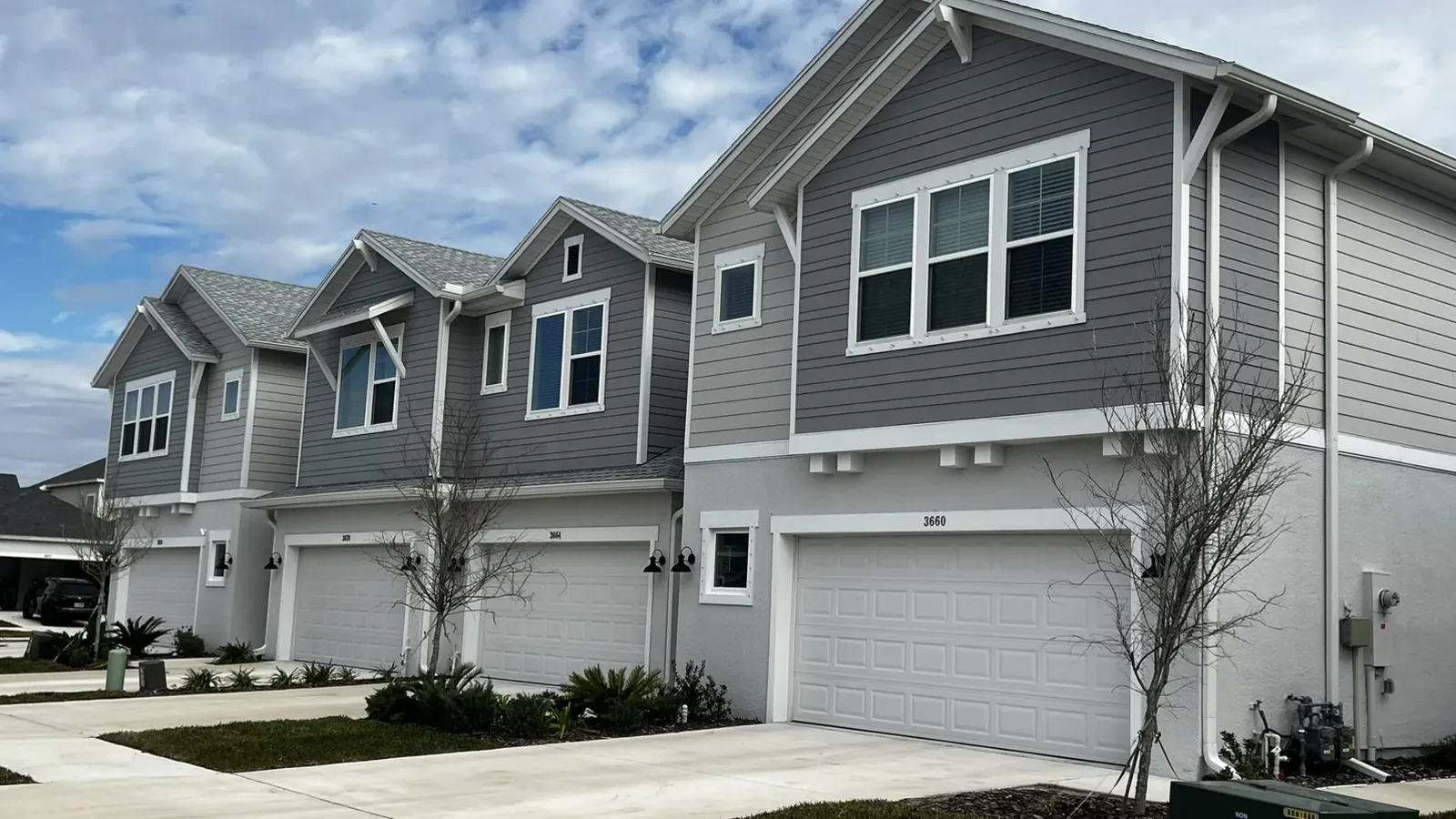
What seamless actually means
A seamless gutter is one continuous piece of aluminum for each run along the roof edge. There is no joint between one end of the wall and the other. The gutter is made from a flat coil of aluminum that a forming machine bends into shape, and each run is cut to the length it needs to be.
For us, that machine comes to the property. Each run is rolled out and cut to length on the driveway, so a long eave gets one long gutter rather than several shorter pieces pushed together. The profile we fit as standard is a 6" K-style, and there is more on why on our page about the 6-inch seamless gutter.
Seamless gutters are almost always aluminum. The metal is light, does not rust, and bends cleanly in a forming machine. Ours are aluminum with a baked-on enamel finish, which we come back to further down.
Where sectional gutters have joints, and why it matters
Sectional gutters come in pre-cut lengths, often sold off the shelf. To cover a long eave, the installer joins several lengths end to end with connectors or overlapping slip joints, usually sealed with caulk or a gasket. A long run can end up with several joints along it, plus the corners.
Each of those joints is a place where two pieces of metal meet and rely on sealant to stay watertight. In the Florida sun, sealant ages. Aluminum also moves a little as it heats up and cools down every day. Over time a joint can open, drip, or start to catch debris at the lip where one section overlaps the next.
That does not make a sectional gutter worthless. A well-installed one can do its job, and some homeowners hang them themselves for that reason. But every joint is one more thing that has to stay sealed, and a drip from a joint tends to land right on a walkway or along the foundation. Joints in the middle of a run also show from the ground as lines across the face of the gutter.
The seams that do exist: corners
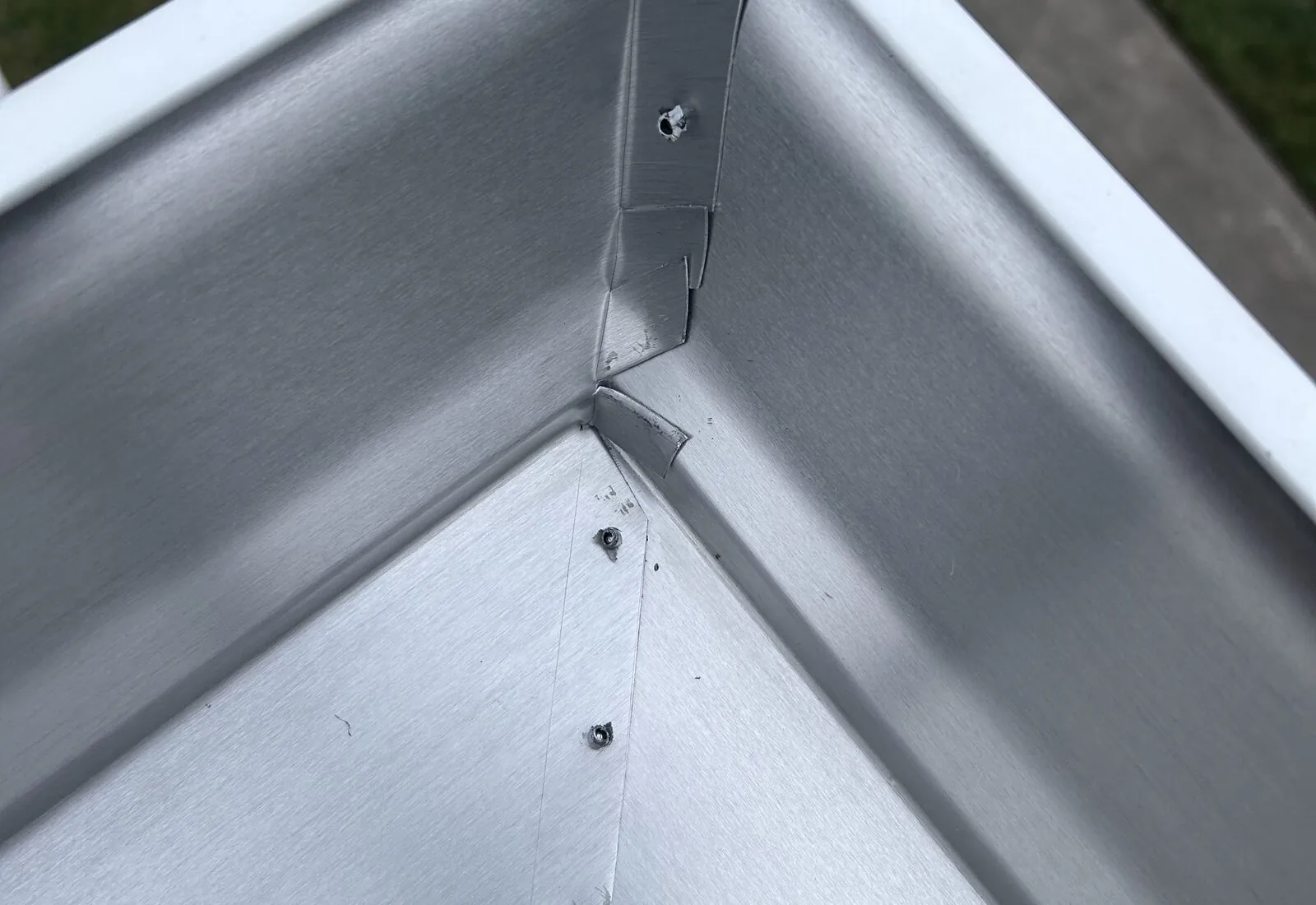
Seamless does not mean there are no joints anywhere. Where a run turns a corner, two pieces have to meet at an angle. That joint is called a miter. On a seamless system, the corners are the only places where the gutter itself has a seam.
We hand-cut each miter to the exact angle of the corner, rather than relying on a stock corner piece that assumes the house is perfectly square. The joint is fastened with five rivets and then caulked on the inside with heavy-duty caulk, so water running past it meets a sealed seam rather than an open edge.
That leaves a short, known list of joints you can point to and check: the corners and the places where the downspouts connect. On a sectional run, joints also sit wherever one length happened to run out.
“Seamless means one piece per run, not one piece per house.”
One finish, carried all the way through
The aluminum we use has a baked-on enamel finish applied at the factory. Because the gutter is formed from coil that is already finished, the color runs the full length of every run, with no painted joints or touched-up sections.
The same finish carries through the downspouts and the endcaps. Our endcaps are factory color-matched baked-on enamel, never painted on site. Paint brushed on at the house weathers at a different rate from a baked finish, and a few years later the ends of a gutter can look a shade off from the rest of it.
There are fourteen colors, from Low Gloss White and Almond through to Musket Brown, Bronze and Black. The standard 3×4 downspouts come in multiple colors. The larger 4×5 downspout is stocked in low gloss white or bronze only.
Why rivets instead of screws
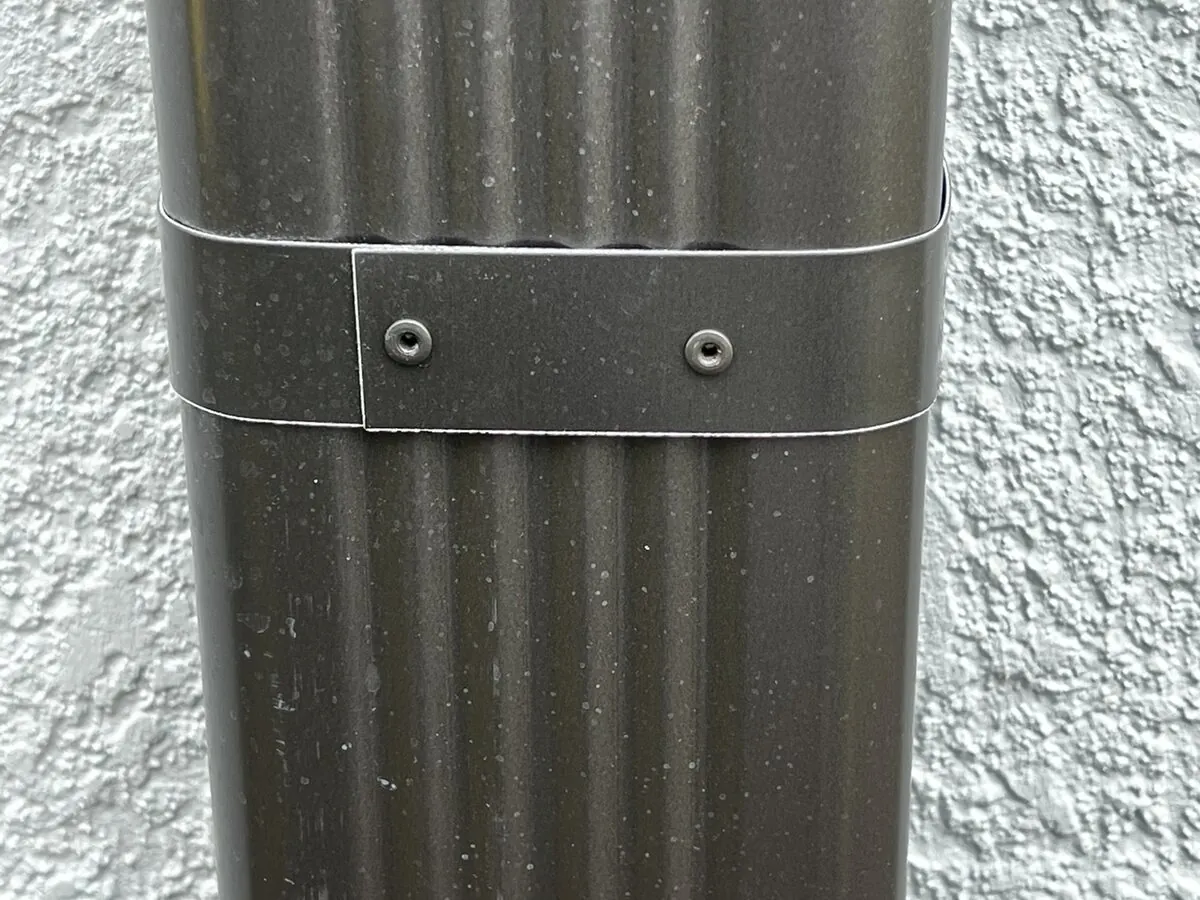
On miters and downspouts we fasten with rivets rather than screws. A rivet is set from one side, pulled tight, and then sits flat against the metal.
There are three practical reasons. Rivets sit flat, so no screw head stands up inside a corner for leaves to catch on or for water to work around. They do not rust, so you do not get streaks running down a white downspout after a few summers. And they look cleaner from the ground, which matters on a downspout that runs down the front of the house.
Screws still have a place. The heavy-duty hangers that hold the gutter to the house have a built-in screw, and we space them at roughly 30" along the run. That is a different job: carrying the weight of the gutter and the water in it. For joining metal to metal at a corner or a downspout strap, a rivet is the neater fastener.
Choosing between them and comparing quotes
For most homes, the choice between seamless and sectional comes down to how many joints you are willing to look after. A seamless run has joints only at the corners and outlets. A sectional run has those, plus a joint wherever one length meets the next. We install seamless gutters only, so weigh that when you read this, but the reasoning holds whichever company you call.
If you are comparing estimates, ask each company the same questions. Is the gutter formed on site to the length of each run? What size is it? How are the corners cut and fastened? Are the endcaps painted or factory finished? How far apart are the hangers? Our page on how to compare quotes goes through these in more detail, and our seamless gutter installation page shows how we handle each step.
If you are in our part of Tampa Bay and want to see what this would look like on your house, we can come out, measure the roofline and walk the job with you. Estimates are free and carry no obligation, and you can ask for a free estimate whenever suits you. The person who quotes it is the person who installs it.